
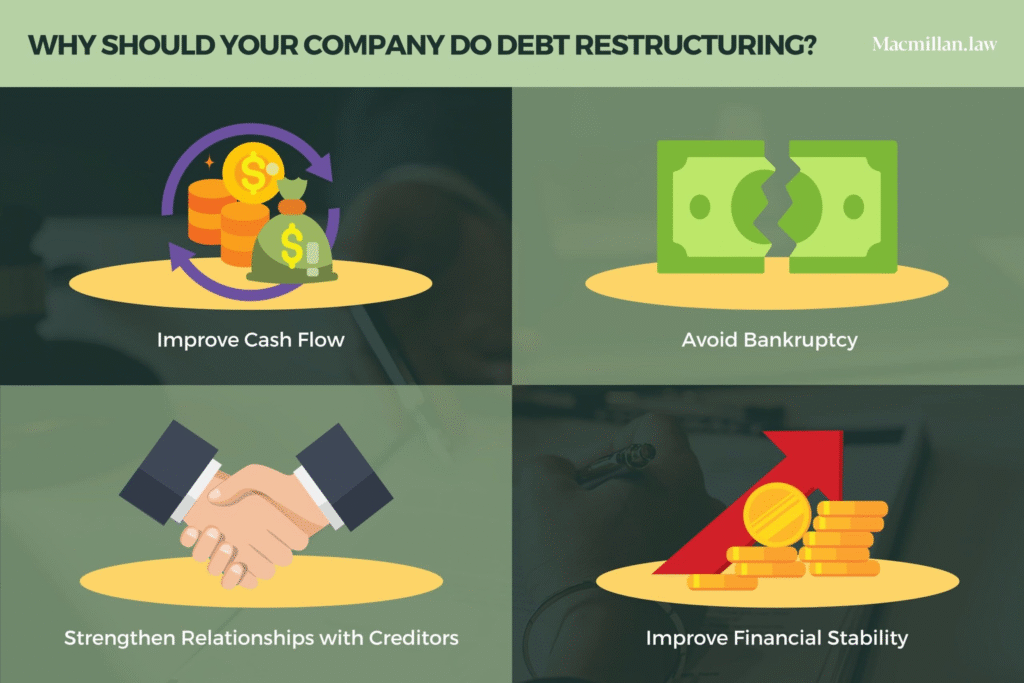
When a company reaches the point of bankruptcy, it does not necessarily mean the end of its existence. In many cases, businesses attempt to recover by restructuring their debt and reorganizing their financial commitments 公司清盤程序. This process can give a struggling enterprise a second chance, but it comes at a price. Bankrupt company debt restructuring costs often vary depending on the size of the company, the complexity of its debt obligations, and the legal or professional services required to guide it through the process. Understanding these costs is crucial for business owners, creditors, and investors alike, as it sheds light on the real challenges of financial recovery.
What Debt Restructuring Involves
Debt restructuring is the process where a financially distressed company negotiates with creditors to modify existing repayment terms. This can include extending the time to repay, reducing interest rates, forgiving a portion of the debt, or exchanging debt for equity. The primary goal is to ease financial pressure and make repayment more manageable without shutting down operations entirely.
For a bankrupt company, debt restructuring often becomes part of a court-supervised reorganization, where legal procedures ensure fairness for both the company and its creditors. This type of restructuring is far from simple, and it brings with it significant expenses.
Key Factors Influencing Restructuring Costs
Bankrupt company debt restructuring costs are not fixed; they depend on multiple variables. Some of the most influential factors include:
- Size and complexity of debt: A multinational corporation with billions in debt will face far higher restructuring expenses compared to a small local business.
- Number of creditors: Negotiating with a few lenders is far less costly than dealing with dozens or even hundreds.
- Type of debt instruments: Bonds, secured loans, trade credits, and derivative contracts each require different legal and financial strategies.
- Court involvement: In many jurisdictions, bankrupt companies must go through formal bankruptcy courts, which add filing fees, legal costs, and monitoring expenses.
Understanding these factors helps stakeholders anticipate potential financial burdens during the restructuring phase.
Professional Fees and Advisory Expenses
One of the largest components of bankrupt company debt restructuring costs comes from hiring professionals. Attorneys, financial advisors, restructuring consultants, and accountants all play critical roles in navigating the process.
- Legal fees: Lawyers handle bankruptcy filings, creditor negotiations, and compliance with corporate law. Their expertise is essential but often comes with high hourly rates.
- Financial advisors: These experts assess the company’s financial health, create restructuring plans, and negotiate terms with lenders.
- Consultants: In some cases, consultants are hired to help revamp operations, cut expenses, and improve profitability alongside debt restructuring.
These professional services are indispensable but add substantial weight to the overall costs.
Administrative and Court Costs
When debt restructuring happens under bankruptcy protection, court costs cannot be avoided. Filing fees, trustee fees, and administrative expenses are common. Some courts also appoint independent examiners to evaluate company practices, adding another layer of expenses.
In addition, companies must prepare extensive documentation, including financial statements, restructuring proposals, and compliance reports. Producing these materials requires both time and money, further increasing the financial burden.
Impact on Creditors and Investors
Restructuring costs are not borne solely by the bankrupt company. Creditors also face expenses related to negotiations and potential legal battles. They may need to hire their own lawyers and financial experts to protect their claims. In some cases, creditors agree to absorb part of the restructuring costs in exchange for more favorable repayment terms.
Investors, on the other hand, often experience losses during restructuring. Debt may be converted into equity, diluting existing shareholders’ stakes. Although this helps reduce liabilities for the company, it may not always favor investors looking for long-term returns.
Short-Term vs. Long-Term Costs
Bankrupt company debt restructuring costs can be divided into short-term and long-term categories.
- Short-term costs include legal fees, court expenses, and advisory services. These are immediate and unavoidable outflows of cash.
- Long-term costs involve reduced creditworthiness, loss of reputation, and limited access to future financing. Even after restructuring, lenders may impose stricter terms due to the company’s bankruptcy history.
Balancing these costs against the benefits of restructuring is essential to determine whether the process truly supports financial recovery.
Operational Adjustments and Hidden Costs
Beyond the obvious financial expenses, restructuring often forces a company to make operational changes that carry hidden costs. Downsizing staff, closing unprofitable divisions, or selling assets can be financially and emotionally taxing. Severance packages, relocation expenses, and loss of talent all contribute to the overall burden.
Furthermore, the uncertainty surrounding bankruptcy proceedings can hurt relationships with suppliers, customers, and partners. Lost business opportunities during restructuring represent another cost that is not always immediately visible on financial statements.
Strategies to Reduce Restructuring Costs
While it is impossible to eliminate restructuring expenses completely, bankrupt companies can take steps to minimize them:
- Early action: Addressing financial distress before it escalates into full bankruptcy reduces complexity and associated costs.
- Out-of-court negotiations: Reaching agreements directly with creditors can save on legal and court fees.
- Efficient planning: Preparing accurate financial data and restructuring proposals early speeds up the process and avoids unnecessary delays.
- Selective use of professionals: Hiring advisors with proven expertise can reduce wasted time and prevent costly mistakes.
By managing the process carefully, companies can keep restructuring costs under control while maximizing the chances of survival.
The Broader Economic Impact
Bankrupt company debt restructuring costs do not just affect individual businesses. They ripple across the economy, influencing employment, supply chains, and investment confidence. High restructuring expenses may discourage companies from seeking recovery, leading to permanent closures and job losses. Conversely, successful restructuring can preserve industries, protect workers, and maintain economic stability.
Governments and financial institutions often recognize this balance and may step in with incentives, subsidies, or legal reforms to make restructuring more efficient. Policies that streamline court procedures or encourage creditor cooperation help reduce costs and improve outcomes.
Conclusion
Bankrupt company debt restructuring costs are an unavoidable part of the recovery process for financially distressed businesses. They encompass legal fees, advisory expenses, court costs, and hidden operational challenges. While these expenses can be significant, they must be weighed against the potential benefits of survival and long-term stability. For many companies, restructuring represents the only viable path forward, even if it demands substantial upfront investment.
Understanding these costs not only helps companies prepare for the journey ahead but also provides creditors, investors, and policymakers with insights into the realities of corporate financial recovery. In the end, successful restructuring is not about avoiding expenses but about ensuring that the costs lead to a sustainable and profitable future.